

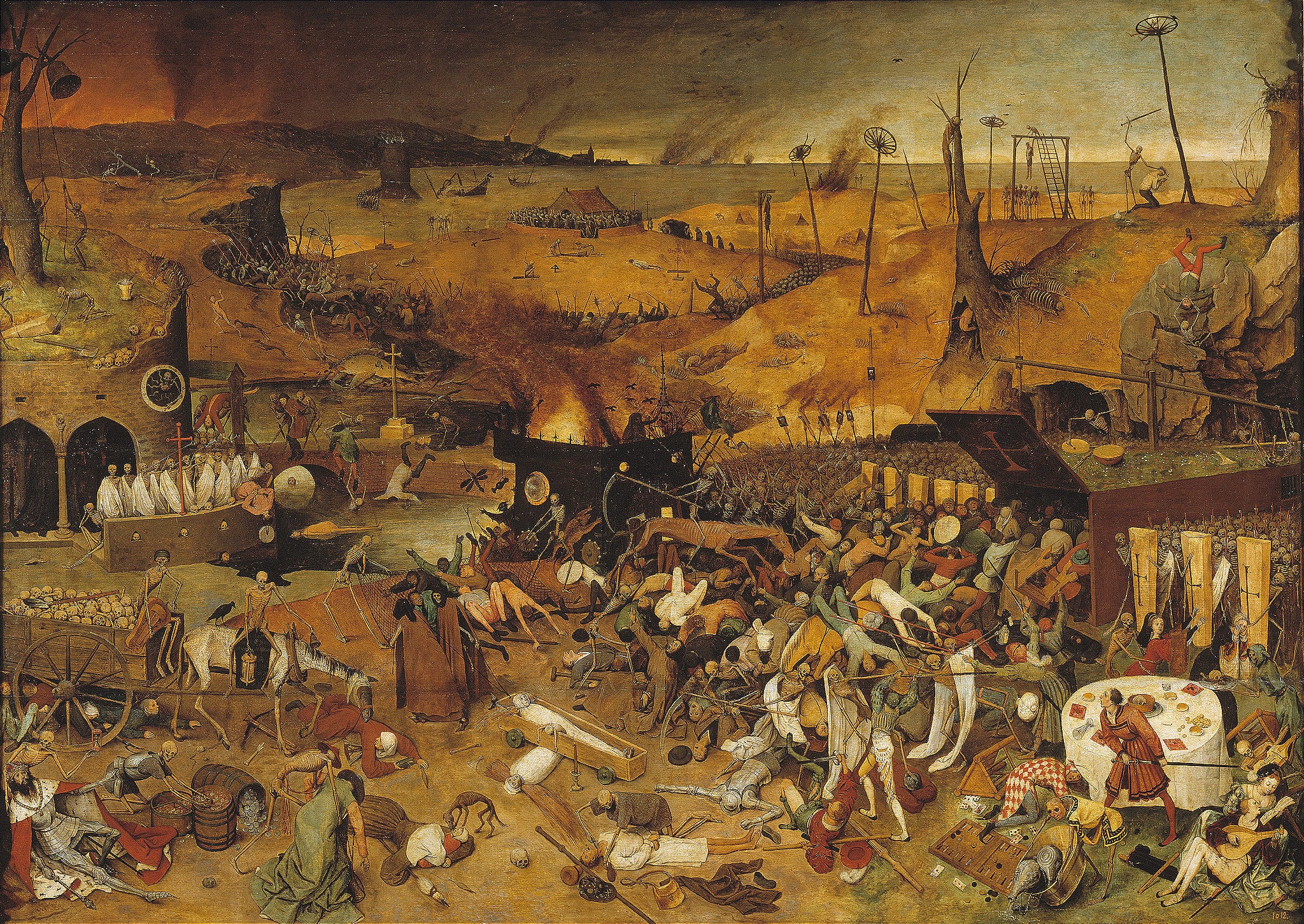
The Black Death wiped out a third of Europe — possibly as many as 50 million people perished as a result of the deadly plague. The word apocalyptic doesn’t even cover it. It’s a wonder it didn’t actually spell the end of European civilization.
From the perspective of a 14th-century peasant on the ground, it would have been a traumatic experience on a scale we can’t comprehend today: dozens of your friends and family covered in blisters and sores before succumbing to fever and eventually death. And you might be next. The Final Judgement surely felt near!
But if you managed to survive, your life may have actually improved from the conditions you were in beforehand. You had more food, pay, and maybe some land, too. Your station in life instantly skyrocketed. Sounds impossible, right?
Well, for some it’s exactly what happened. Though the Black Death almost ended European civilization, it actually contributed to a rebirth in many ways. For one, it reordered society, allowing for upward mobility of peasants previously locked in a stagnant hierarchy.
Here’s how the Black Death helped create a brighter future for those who remained…
Reminder: You can support us in forming minds and rebuilding the West by unlocking our members-only content:
✔️ Full premium articles every Tuesday + Free content Thursdays
✔️ The entire archive: Western history, literature, and culture
✔️ The Great Books lists (Hundreds of titles that influenced Western thought)
Join to start reading and support the mission today 👇
Agent of Chaos
Supposedly first introduced to Europe during the siege of Caffa in 1347, the disease was likely carried by fleas that hitched rides on Genoese ships sailing around the Mediterranean. At the time, no one could have guessed the damage these little fleas would cause…
Major population centers like Constantinople, Sicily, and Italy were rich targets and eventually launching pads for the plague to reach mainland Europe. Once on land, the Black Death jumped from a flea-born disease to humans, spreading from person-to-person as a type of lung infection.
The speed at which the plague spread is perhaps what is most remarkable about the disease. Just a few years after reaching Caffa, it had spread to every corner of Europe — from Russia to England to Spain. And everyone became acutely aware of the plague’s symptoms: swollen lymph nodes, fever, skin sores, then death.
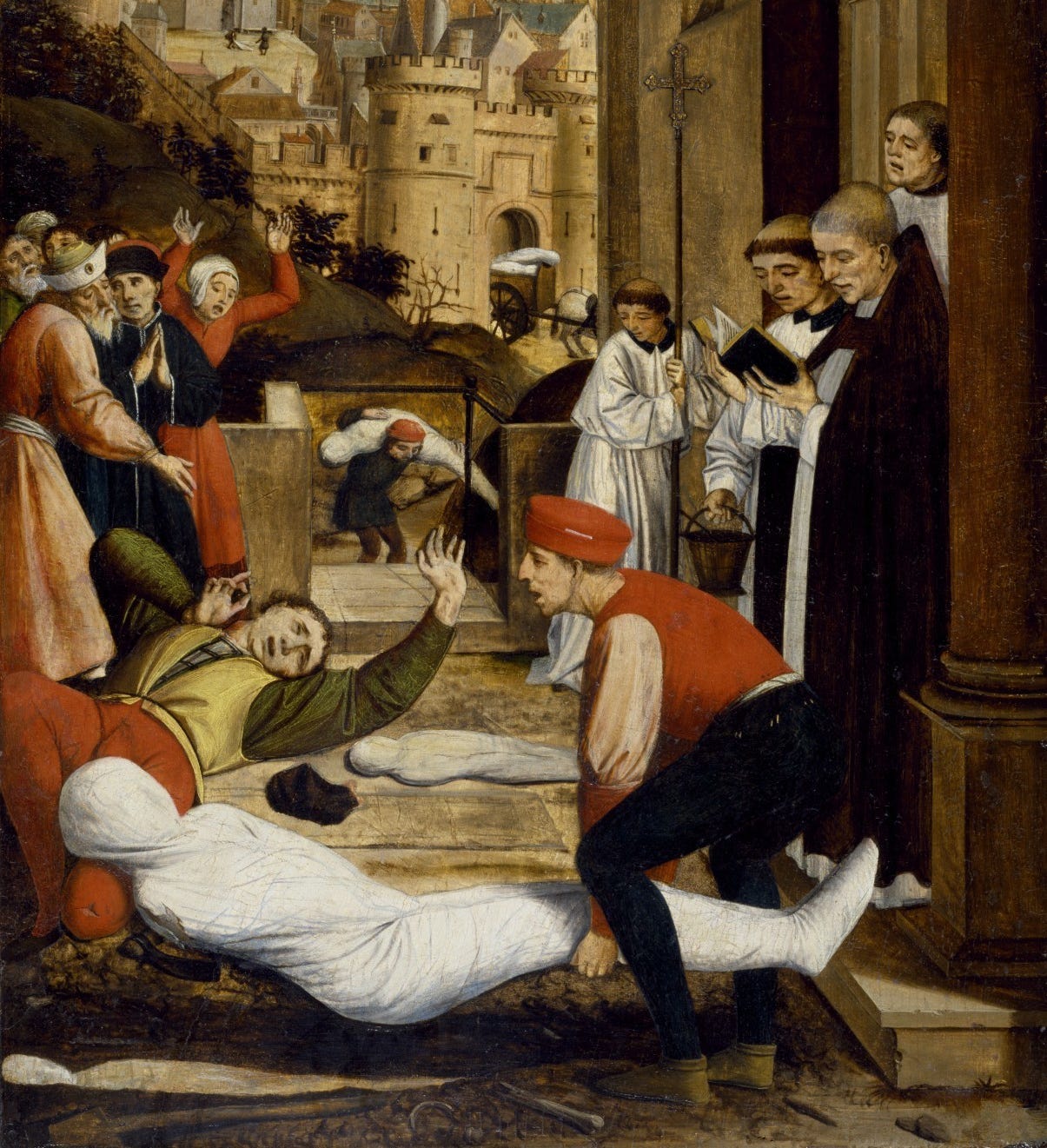
Estimates are that between 30-60% of the population succumbed to the illness. Entire towns and families were wiped out. Mass graves were dug to keep up with the staggering amount of corpses. Italian chronicler Agnolo di Tura wrote in 1348:
“Members of a household brought their dead to a ditch as best they could, without priest, without divine offices...great pits were dug and piled deep with the multitude of dead. And they died by the hundreds both day and night”
It sounds like Hell on earth — or divine punishment — and that’s exactly how many interpreted the events. For some, the plague could only be explained as wrath from God for their sins. Others saw it as the end of the world, referencing the book of Revelation where it states “a third of mankind was killed” due to plague.
In some ways it was the end of the world, though. Or at least the end of a certain type of society…
Rapid Social Changes
The effects of the Black Death on the medieval world have been the topic of wide speculation. Everything from climate change to advances in medical science have been attributed to the plague.
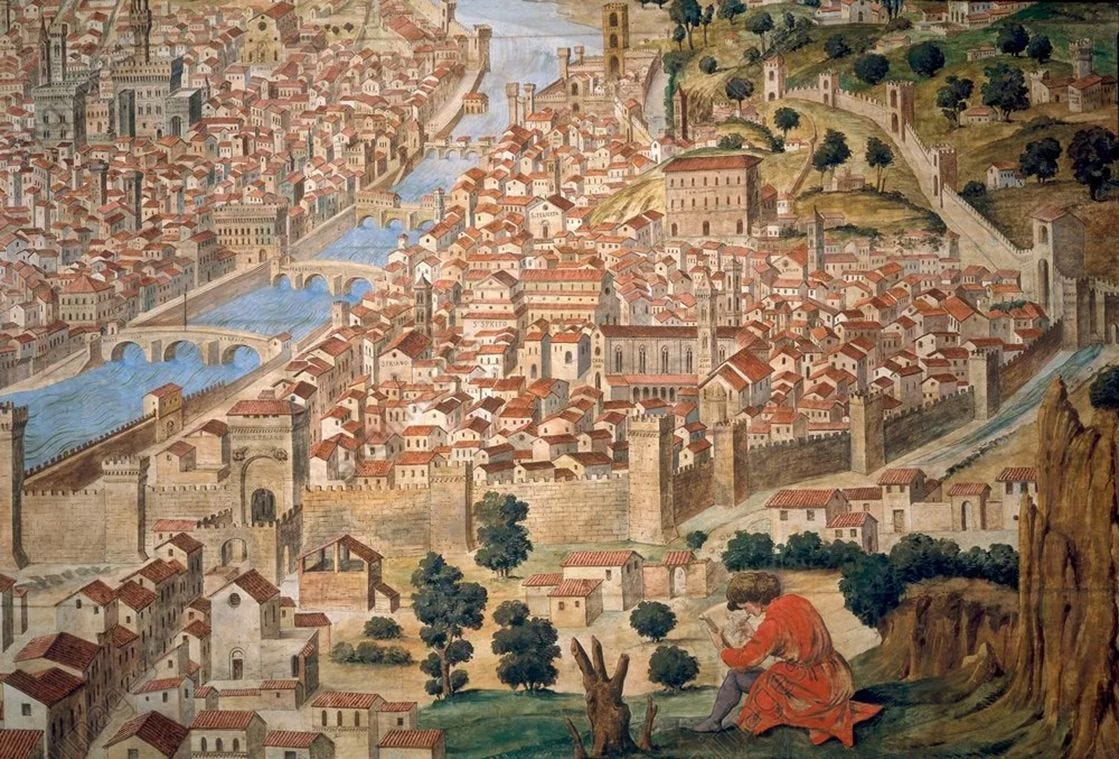
Some scholars have even theorized the Renaissance got its jumpstart from the Black Death. The plague hit especially hard in Florence and other Italian cities, and it’s possible a worldview shift occurred — familiarity with death caused thinkers to dwell on matters of religion and spirituality. This wave of piety then manifested in the widespread sponsorship of religious art, leading to an explosion in painting, sculpting, and architecture. Much of Renaissance art was a contemplation of death and the possibility of life anew in Christianity.
Though the plague’s role in the birth of the Renaissance is conjecture, what’s more concrete is that it contributed to feudalism’s downfall and the rise in upward mobility for the peasant class.
