

Before the first monk preached north of the Baltic, the Norse already lived with gods. Their gods, however, were many, mortal, and incompatible with the Christianity sweeping across Europe.
To the Christian, the Norse paganism was just another polytheistic mythology doomed to fates of the Greek gods and state-sanctioned Roman gods. However, the Norse and Viking culture was something altogether different than the comparatively civilized Mediterranean cultures.
The Vikings were steeped in centuries of clan attitudes, oral traditions, glory as the supreme prize of war, and a slew of gods and rituals to fill the spiritual hole of their people — Thor defended mankind, Odin sacrificed himself for wisdom, Freyja foretold the future of man.
But in Norse beliefs, there were no holy books, little true orthodoxy, and only a loose sense of any universal moral law. Religion was clan memory set to ritual. In these gaps, Christianity could gain a foothold. Here’s how the Vikings became Christians.
Reminder: You can support us by unlocking our members-only content:
✔️ Full articles every Tuesday
✔️ The entire archive of content: Western history, literature, and culture
✔️ The Great Books lists (Hundreds of titles that influenced Western thought)
Join to start reading and support the mission today 👇
Early Attempts
Christianity first came to the Norse by the Vikings’ own hands. The sack of Lindisfarne in 793 is often called the beginning of the Viking Age. Monasteries became easy targets: rich in silver, poor in defense. Monks were slaughtered or enslaved. Churches were burned.
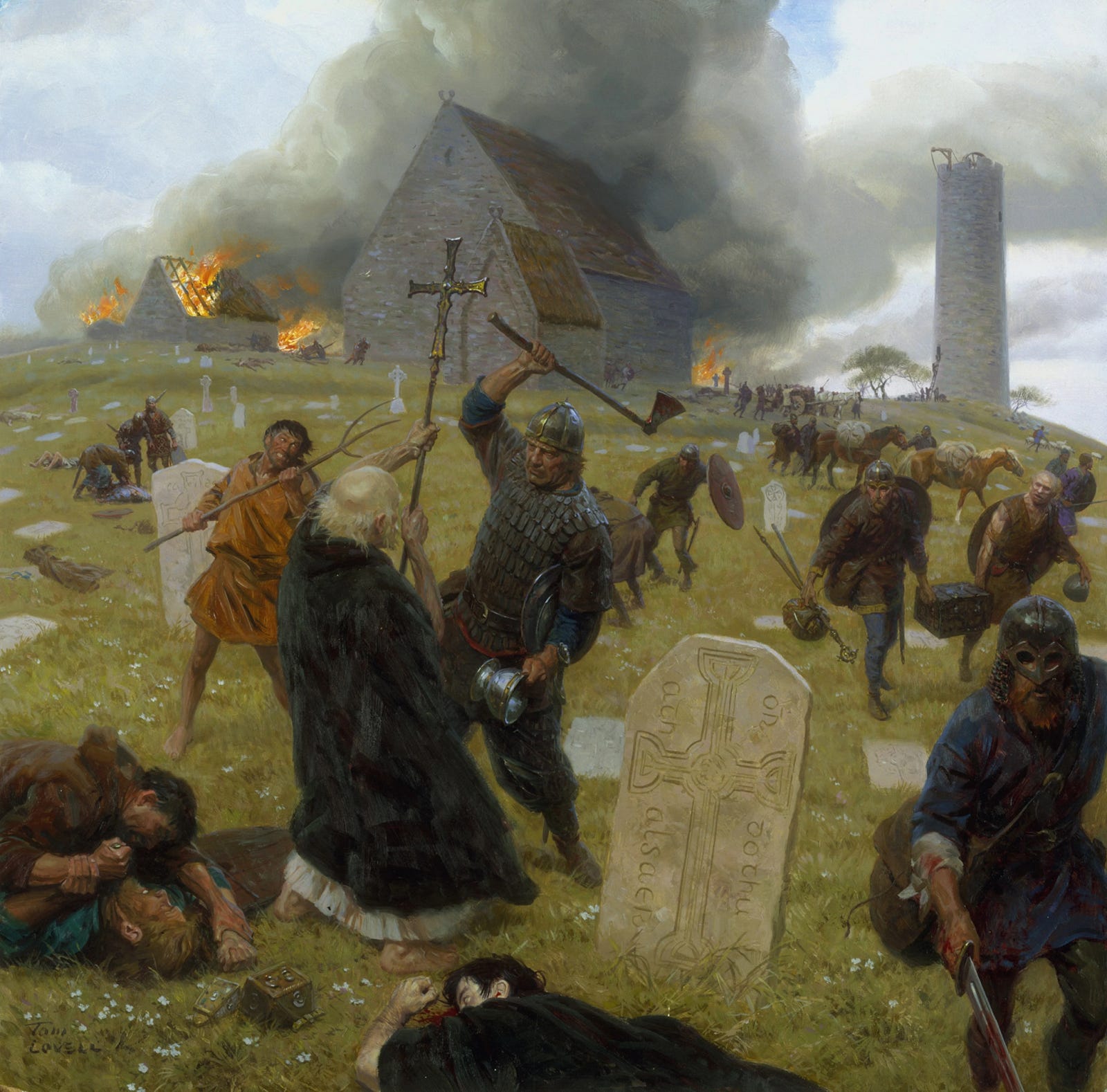
And yet, in this violence came exposure. Christian captives were taken home. They sang psalms, carried crosses, spoke of strange ideas — of mercy, sin, and eternal life. Some converted their captors. The gospel in Viking settlements was kindled but needed time and fuel.
Early evangelization efforts included missionary travels by the Anglo-Saxon monk and bishop Willibrord, whose efforts to convert the Danish king ultimately failed but did result in a few dozen Danes returning with Willibrord to further deepen their faith.
Ebbo, archbishop of Reims and Willerich, later Bishop of Bremen, preached to the Danes in the early 800s — again with little success. The conversion of Viking minds and hearts was going to be difficult.
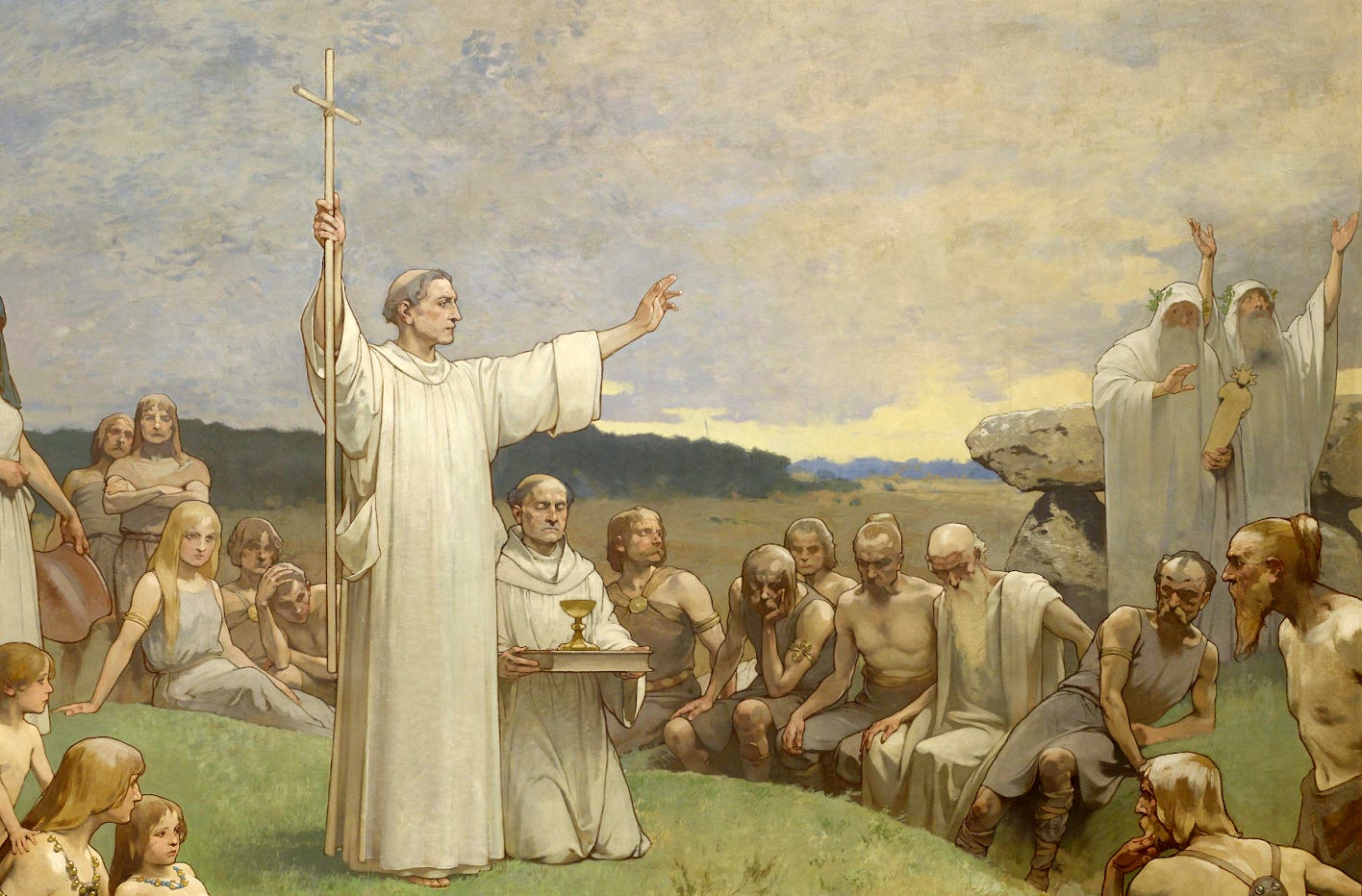
However, not long after Ebbo, lasting successes were achieved by Ansgar, the “Apostle of the North.” He preached in Denmark and Sweden in the early 9th c., built the first Viking churches in Birka, Hedeby, and Sleswick, and secured Christianity safe practice in Denmark. St. Angar’s missionary work only laid the seeds of the Viking conversion, however, as it would still be another century before the Scandinavian kings would begin to take up the cross themselves.
If Christianity was going to take hold in Scandinavia, it needed a new strategy: convert the centers of Viking power and the people would follow. The real conversion of Scandinavia began with kings instead of peasants.
Converting the Kings
Christianity offered more than salvation to Viking leadership: it offered the tools and prestige of kingship. A Norse chieftain could ascend to the status of a European monarch. A simple baptism meant access to Frankish alliances, literacy, and sacred legitimacy.
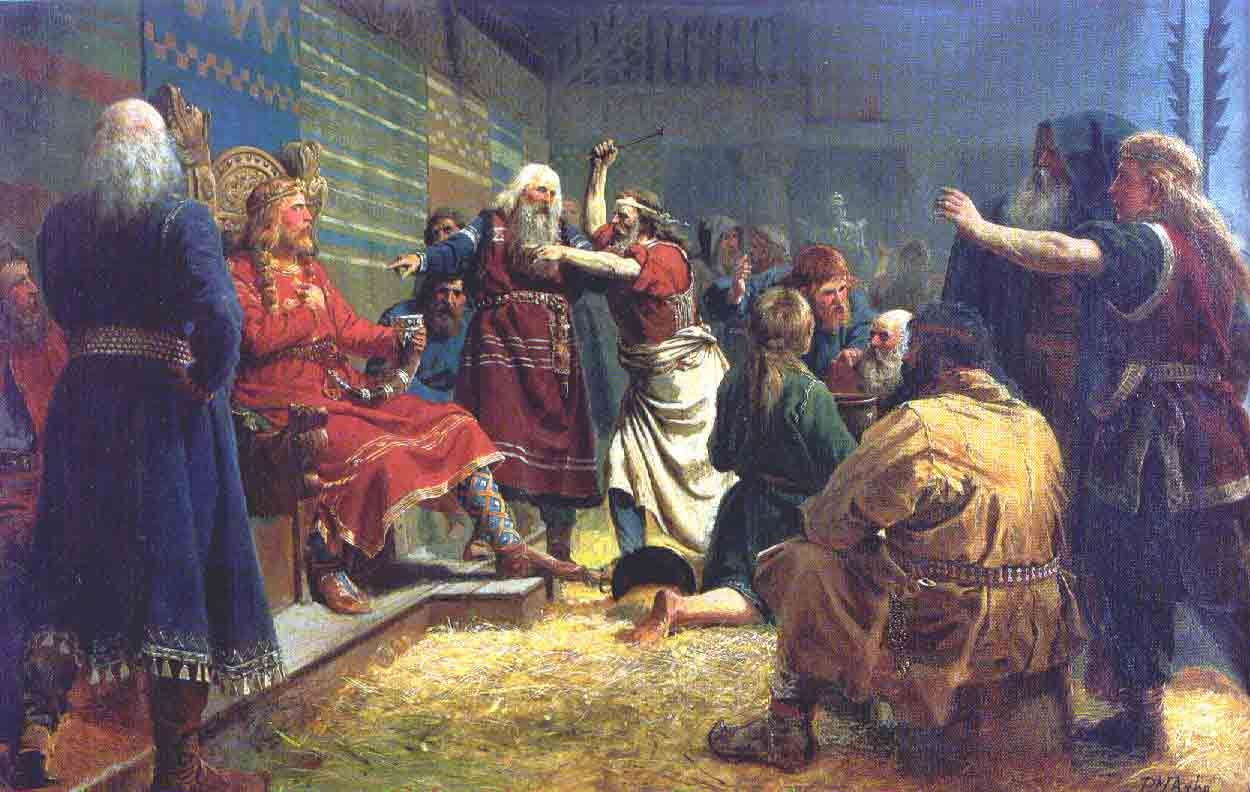
To rule by the cross was to rule not as a clan warlord, but as a king with all the majesty of the European mainland kings, like the great Charlemagne.
Harald “Bluetooth” Gormsson of Denmark accepted baptism and announced he had “made the Danes Christian.” Harald raised a massive runestone depicting a crucifix to enshrine his conversion. His stone and his father King Gorm the Old’s stone are known today as the Jelling Stones.
Contrary to popular sentiments, leading historians don’t generally believe Christianity was forced upon the Vikings. Rather, the Scandinavian kings willingly adopted it; but whether for true conversion or political advantage remains an open question. Part of the Viking’s conversion resulted from their own conquest, particularly of England, where thousands of Danes settled, married Christians, converted, and softened their clansmen's views toward Christianity. Many converts would then take the faith back to their homelands.
In 995, the Norwegian Olaf Tryggvason, King Olaf I, reformed his ways of raiding Christendom and converted after a Christian seer accurately predicted his own men’s mutiny. He returned to Norway a baptized man and set about converting his kingdom.
But it was another Olaf who brought the Christianization of the Norse world to closer completion. Olaf Haraldsson, later canonized as St. Olaf, combined Christian zeal with statecraft.
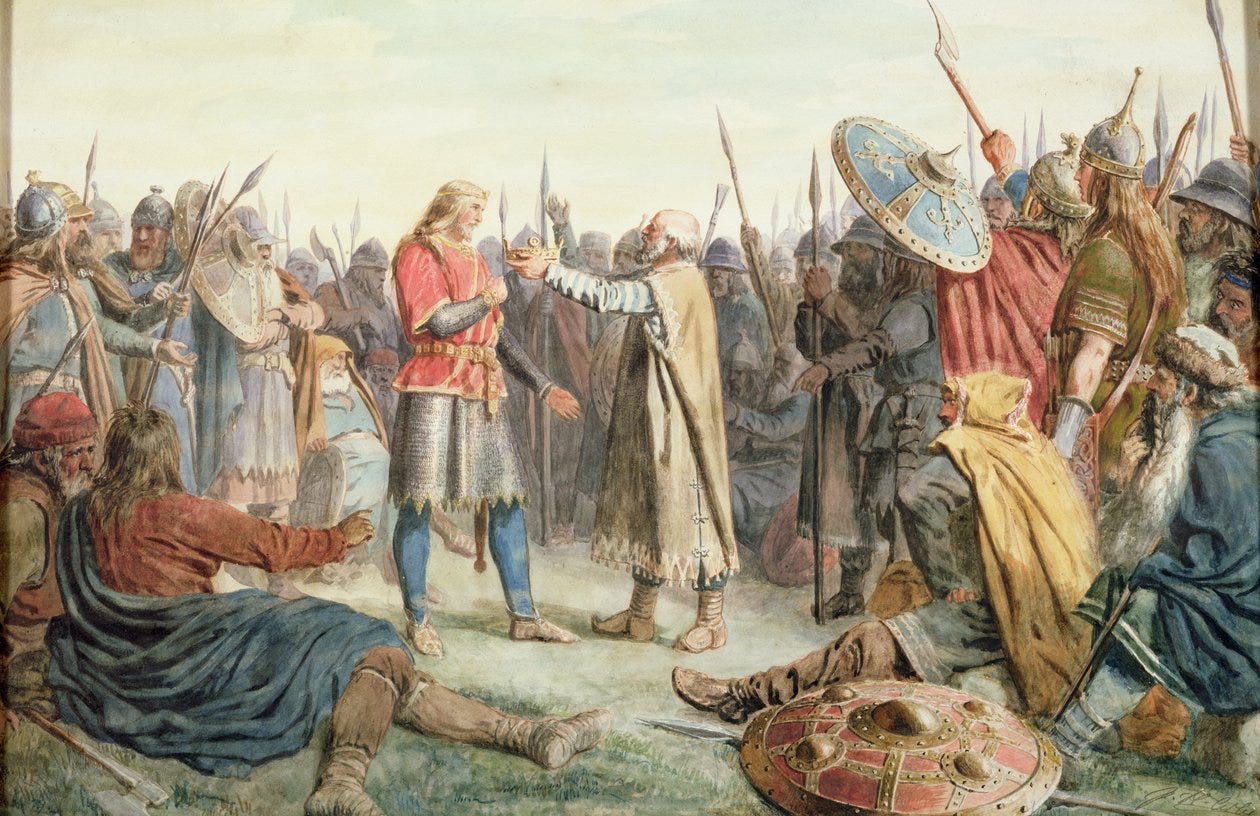
Though his direct role is debated among scholars today, he was often credited with implementing Christian law, building churches, and reshaping the role of kingship in Norway. Either way, his quick canonization after his death inspired many conversions throughout his country.
In Sweden, while Ansgar and Unni, the archbishop of Hamburg, had made early attempts, the biggest early inroads were made by 10th century English missionaries. In its early history, articles of toleration were drawn up with the first Christian king of Sweden in the 990s. Episcopal sees were established shortly after in Skara and Sigtuna, and finally an archdiocese established later in 1164 at Uppsala by papal initiative.
One interesting clash between paganism and Christianity in Sweden, according to two sagas of legend and history, was the conflict between Blot-Sweyn and Inge the Elder in the 1080s. When King Inge banned pagan sacrifices at Uppsala, he was forced into exile by his people. The people elected the pagan Blot-Sweyn as king instead. Years later, Inge returned with many huscarls, surrounded the great hall, and set it ablaze, killing Blot-Sweyn as he fled the flames. With Blot-Sweyn gone, Inge resumed power and completed his Christian rule.
Elsewhere, around the year 1000, Iceland supposedly converted by a single vote. Thorgeir, the sole jurist and chief among the pagan faction, contemplated the issue a full day and surprisingly chose that Iceland should become Christian as a whole, but tolerate private pagan rites.
Little by little, stories like these shrouded modern knowledge of conversion process in equal parts of myth and fact. Nonetheless, the end result was the same: a new, Christianized Viking culture.
However, even though the Vikings accepted Christ, habits die slowly…
