

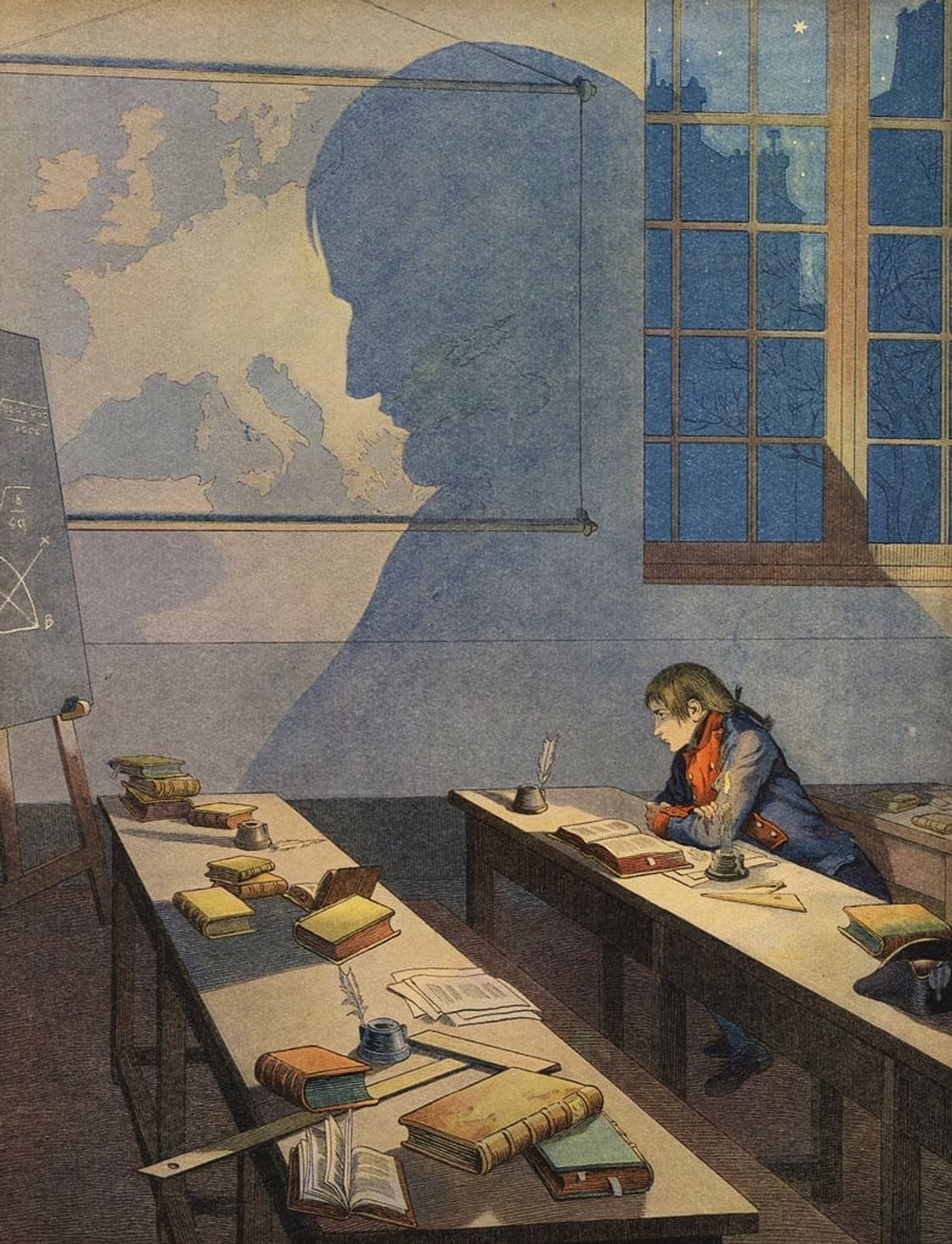
Young Napoleon was bullied by his aristocratic peers. He was aloof, spoke French with a funny accent, and was considered of low nobility due to his Corsican origin.
But he sought refuge in books — igniting a lifelong obsession with reading. It eventually became a “matter of power” for him, shaping how he commanded armies and ruled his empire. According to Louis Sarkozy, author of Napoleon’s Library, books were crucial to his early formation and later military acumen: “…they molded his adolescent mind and influenced his statesmanship. They made him the general he would become and accompanied him to his grave.” Later, his official portraits even reflected his love of reading as he’s often depicted in front of books and libraries.
Though Napoleon read on a wide range of topics, it was history in particular — especially accounts of the great conquerors before him — that gave him an edge in life and on the battlefield.
Here’s how books, and learning about the great men of history, guided Napoleon’s every move…
Reminder: You can support us in forming minds and rebuilding the West by unlocking our members-only content:
✔️ Full premium articles every Tuesday + Free content Thursdays
✔️ The entire archive: Western history, literature, and culture
✔️ The Great Books lists (Hundreds of titles that influenced Western thought)
Join to start reading and support the mission today 👇
A Refuge Among Conquerors
Born on the island of Corsica in 1769, Napoleon inherited an interest in reading from his father Carlo, a learned man of minor nobility who rose to become Corsica’s representative to the court of Louis XVI. As a young boy, he emigrated to mainland France and was enrolled at a religious school in Autun to improve his French.
Here his love of reading blossomed out of sheer necessity. At his new school, Napoleon struggled to fit in with other boys his age. He was described as melancholic and reserved, so in lieu of a large friend group he found solace in books. Sarkozy writes:
“The great conqueror discovered reading first as a safe haven…At the tender age of 12 he had already dozens of authors, principally, those of antiquity, which left a lasting impact on his perception of the world.”
He read about geography, philosophy, and astronomy, but his great love was history. Specifically, Plutarch’s famous work Parallel Lives had more of an impact on the future emperor than perhaps any other. A series of biographies of the greatest men of antiquity, it explores the vices and virtues of its subjects in an effort to reveal the character traits that contributed to their successes and failures. Plutarch endeavored “not to write histories, but lives.”
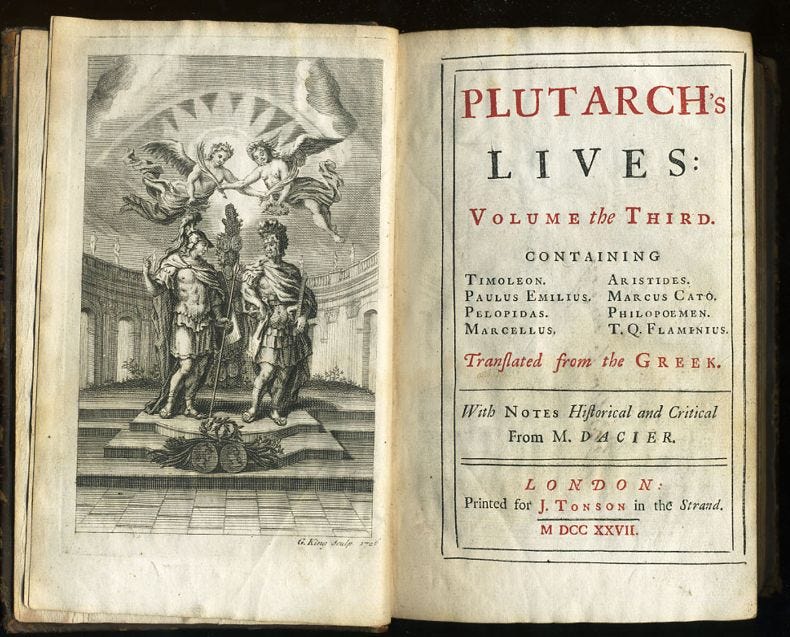
Napoleon especially drew inspiration from the lives of Julius Caesar and Alexander the Great, figures who he continues to be compared with today. At the time, though, he dreamed of measuring up to them, fascinated by Alexander’s lightning conquest or how Caesar occasionally slept in his chariots. From Plutarch’s legendary accounts, Napoleon learned a formative lesson:
“The world is for the taking. Ambition and determination are the means of achieving it. Imitate great men of history, and the world can be yours.”
A Tool For Victory
Besides the merely aspirational benefits, Napoleon’s abilities as a statesman and general were heavily influenced by his reading, too. He took an immensely practical approach to reading as he saw it as a means to an end — a way to extract valuable information that he could use to further his ambitions. Sarkozy writes:
“His many literary adventures, at least as an adult, revolved around the practical. He wanted to quickly get to the nucleus of a book and then move on.”
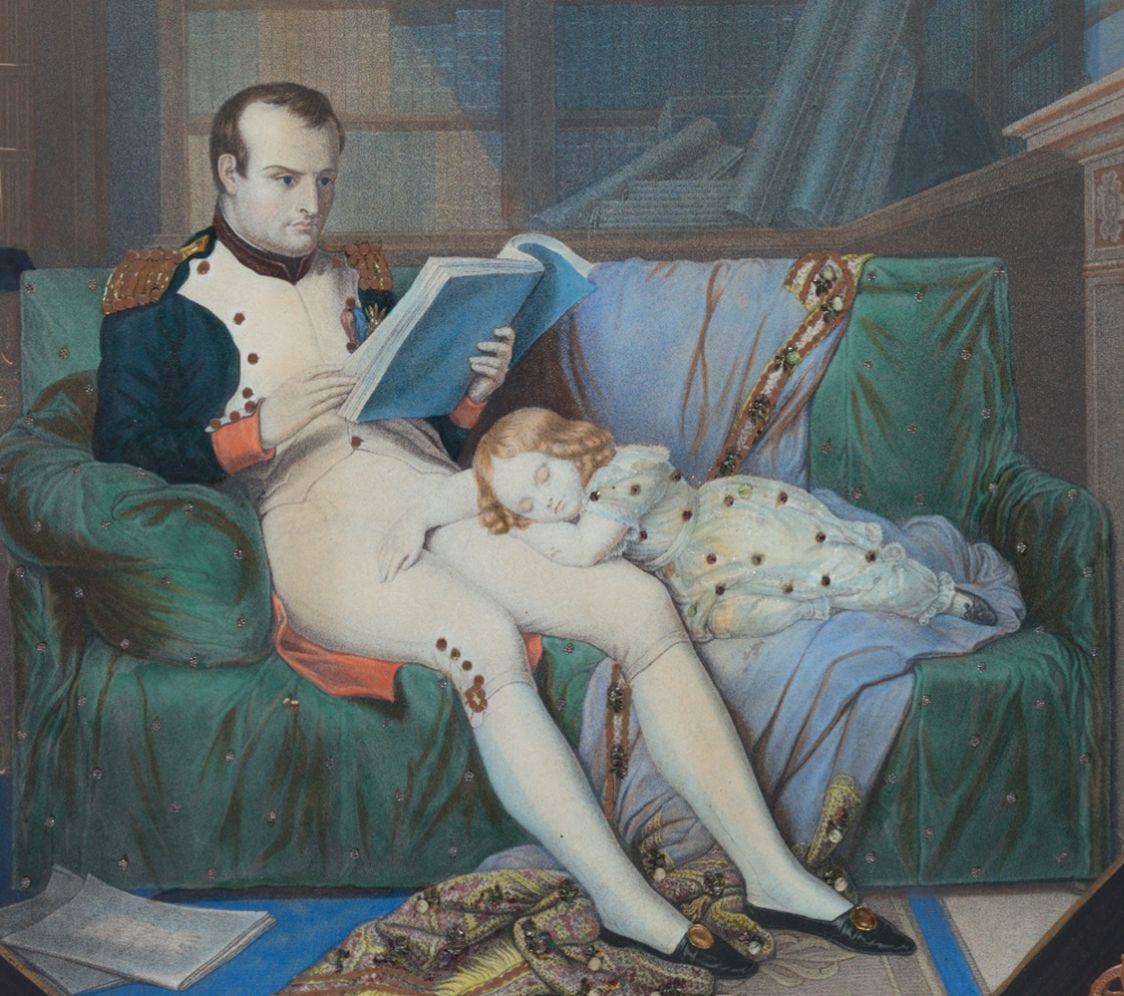
For this reason, Napoleon never stopped reading. Even on military campaigns, he brought books along, commissioning travel libraries which were assembled by his personal librarian Antoine-Alexandre Barbier. These contained volumes on military tactics, history, and geography. The emperor’s generals benefited from his propensity to read on campaign, too, as they were gifted their own book sets.
Much of Napoleon’s leadership style was imprinted on him by literature. The way he interacted with his men was directly motivated by his books. To inspire his troops, he told them they were the “heirs of the great phalanxes of Alexander and the legions of Rome”. He believed he and his men were a continuation of the ancient conquerors he’d read about.
