

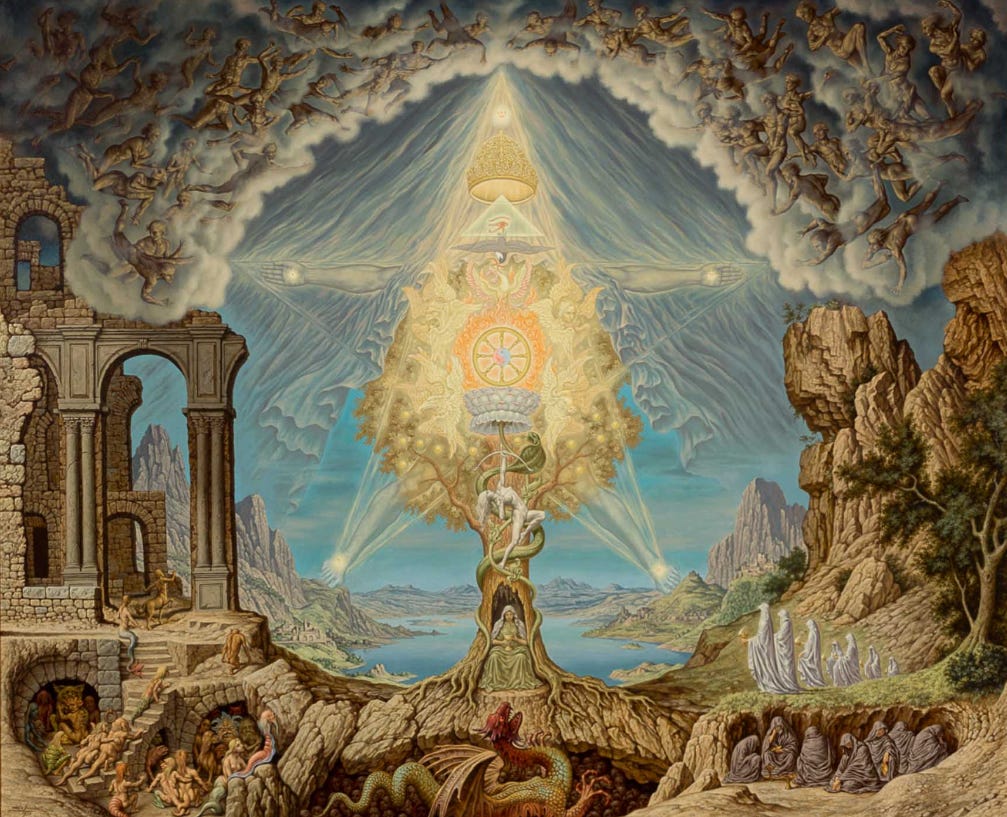
Everything society thinks is brand new is actually old. The book of Ecclesiastes famously states: “What has been will be again, what has been done will be done again; there is nothing new under the sun.”
Philosophies are no exception. How often have you thought you had a novel idea, only to be humbled by a centuries-old thinker? If you’re anything like myself, it’s all too often. But some ideas hang around much too long, and need to die…
One example is Gnosticism, an ancient religious heresy whose ideas have crept into nearly every corner of modern society. Surprisingly, elements of the ancient religion underpin the thinking behind many of the social movements and technological advances that have shaped the modern West: transgenderism, transhumanism, and bio-hacking all share a gnostic understanding of the human soul.
Let’s explore what Gnosticism is, how it’s crept back into the popular zeitgeist, and why it’s so pernicious…and you just might discover that you are a gnostic.
Reminder: You can support us in forming minds and rebuilding the West by unlocking our members-only content:
✔️ Full premium articles every Tuesday + Free content Thursdays
✔️ The entire archive of content: Western history, literature, and culture
✔️ The Great Books lists (Hundreds of titles that influenced Western thought)
Join to start reading and support the mission today 👇
Gnosticism: A Separation of Body and Spirit
To understand how Gnosticism pervades modern thinking, let’s do a brief rundown of the ancient religion. A collection of religious sects that arose out of early Christianity in the late 1st century, Gnostics placed personal spiritual knowledge above the tradition and authority of defined religious institutions — namely the Church.
A core philosophy of Gnosticism was a dualistic worldview. Gnostics viewed the physical world as inherently flawed — or even evil — and claimed that the material universe was created not by God, but by a lesser divinity called the demiurge. During creation, bits of divinity (pure spirit) were mixed in along with the tainted material, which caused the fallen nature of man. Christ then undertook his mission to re-order the chaos: the spirit of the supreme God entered into the shell of a man’s body to remedy the situation and help believers reach gnosis — the revelation of man’s true divine nature. In the gnostic view, then, what defines personhood is not the union of spirit and body (the traditional Christian view), but a divine spirit which merely occupies a physical body.
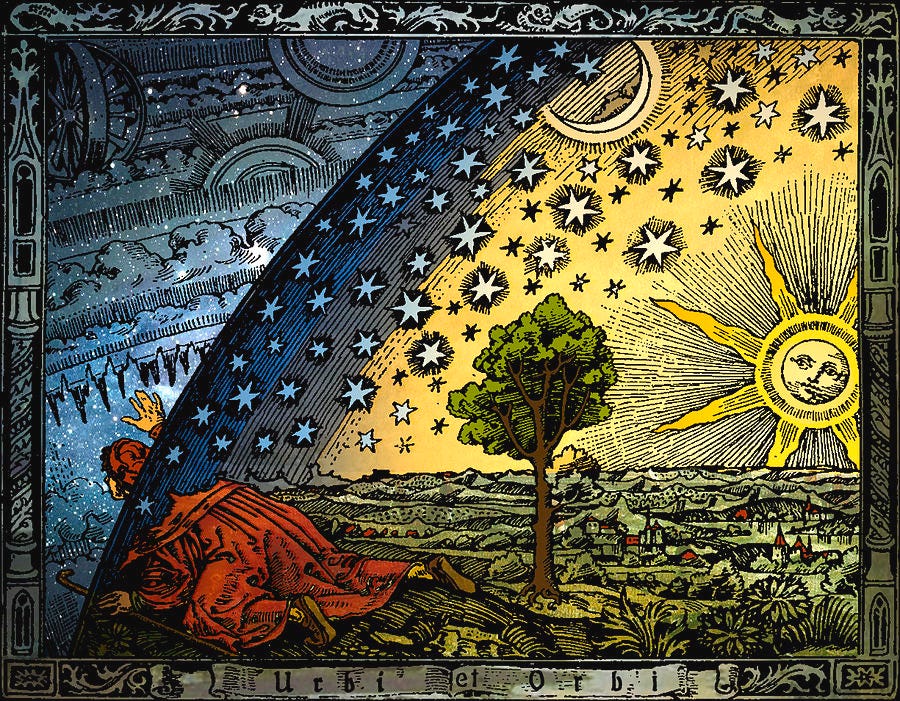
After initially flourishing in the first two centuries after Christ’s birth, Gnosticism was denounced as a heresy and lost popularity in the centuries following. Without the backing of Church authority, Gnosticism largely disappeared by the year 500 AD. Though largely abandoned as a religion today, echoes of gnostic teaching persist…
The Inner Gnosis of Gender Ideology
One of the most prominent ideological controversies of our time stems from a gnostic understanding of the human person: transgenderism.
Transgender ideology stems from the dualist philosophy of the ancient heresy. Here a person’s feelings and beliefs about their gender identity reveal their “true” self, while the reality of their physical body is false. If a biological man believes himself to be a woman in his mind, the inner psyche wins out, not the material reality.
Whether transgender activists know it or not, they are promoting a dualist interpretation of the cosmos — a thoroughly gnostic philosophy. There is the spiritual “real” (divine) world of the mind which is preeminent, and then the physical (fallen) world of material, which can be overridden by reality created in the mind.
Like its gnostic roots, transgender ideology is in direct opposition to Christian beliefs, which firmly state that mankind was created by God as a union between spirit and body. Though subordinate to the spirit, the body is intrinsic to a person’s identity, hence the importance of the “resurrection of the body” referenced in the Apostle’s Creed. The Creed affirms the goodness of God’s physical creation and rejects the idea that salvation is a gnosis or esoteric enlightenment.
The New Testament theologian N.T. Wright voices a similar observation:
“The confusion about gender identity is a modern, and now internet-fueled, form of the ancient philosophy of Gnosticism. The Gnostic, one who “knows”, has discovered the secret of “who I really am”, behind the deceptive outward appearance …. This involves denying the goodness, or even the ultimate reality, of the natural world.” [From The London Times]
Breaking Out Of Our Physical Shell
Another popular ideology that shares a gnostic philosophy is today’s transhumanist movement. There are various strains of transhumanist thought, but the common thread is that transhumanists seek to augment or transcend natural human biology/evolution.
Transhumanists believe that our species’ future is dependent on hyper-accelerating our evolutionary process through the aid of modern science and technology. A common — though admittedly far-fetched — belief is that soon we’ll be able to upload human consciousness into a computer, freeing us from the bonds of physicality. In this scenario, “consciousness” can be viewed in the same light as the “divine spirit” central to Gnosticism. Transhumanists assume that only consciousness is fundamental to a person’s identity, and that the body is merely a receptacle to house consciousness. Once consciousness is uploaded into a machine, the person is now in the machine. This of course suffers from the same fallacy as transgender ideology and Gnosticism: that our bodies are nonessential to our true identity and only the spirit/consciousness is of ultimate value.
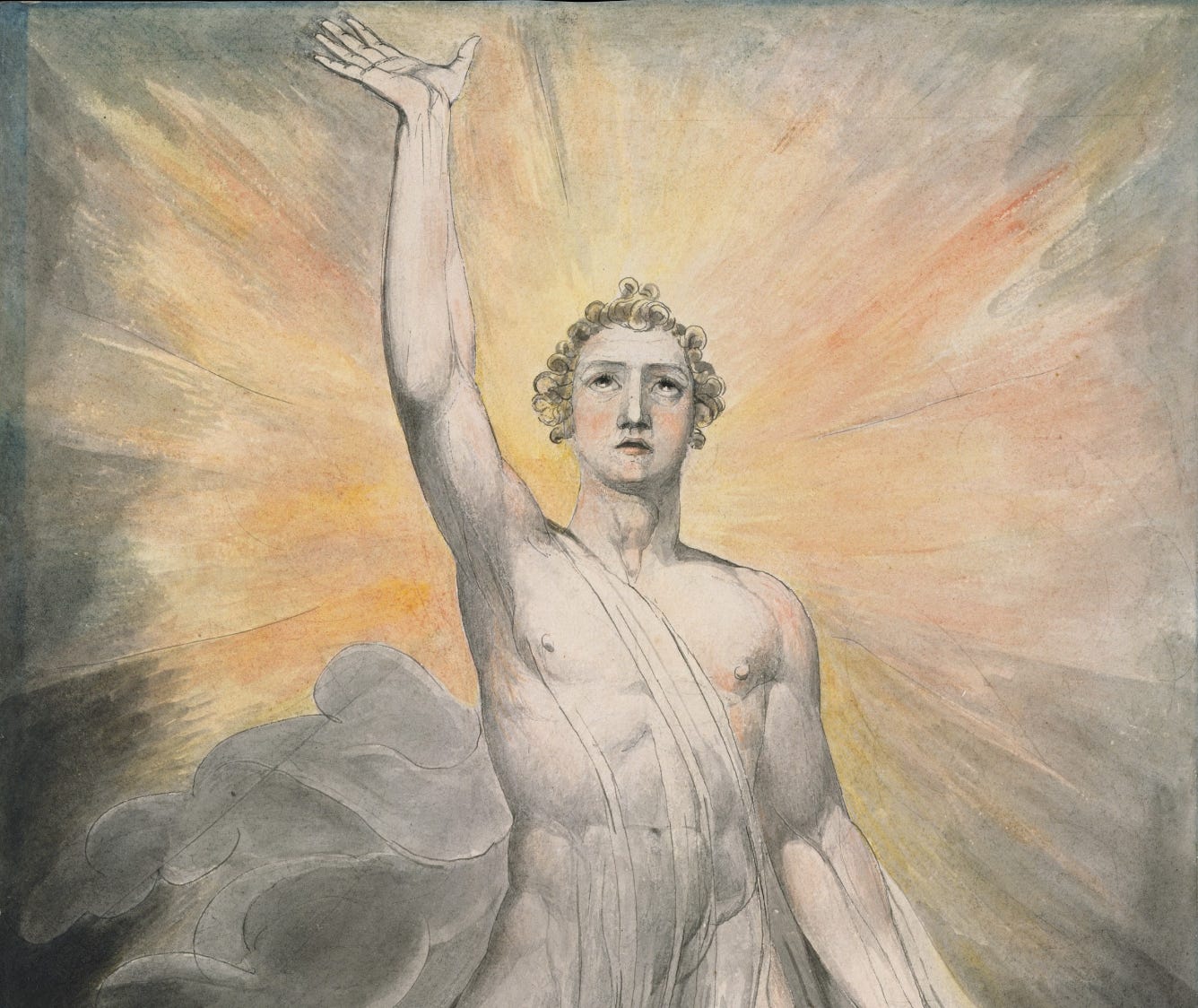
Another strain of transhumanism seeks not to transcend our physical bodies altogether, but to life-hack our way to maximizing efficiency. Often this involves workarounds for eating and sleeping. Whether it be meal-replacement shakes, nutrient bars, or the attempt to reduce sleeping hours to maximize productivity, the disentangling of physical needs from life sacrifices the good of creation to the cold, stale altar of efficiency. Again, this vision stems from the same gnostic thinking that devalues material existence, thus devaluing bodily experience.
The Pervasive Nature of Gnostic Teaching
“I’m not a transgender activist or a transhumanist,” you might say. So how could you be a gnostic?
Well, it stems from their basic principle that the human being is spirit only, and the body is nonessential. So many Westerners today are unwittingly carrying along gnostic baggage when they proclaim platitudes like “it’s what’s on the inside that matters” and the assumption that the spirit is what makes a human being. Even modern Christians often hold this view.
Likewise, phrases like “live your own truth” or the idea that morality is subjective deny that objective truth can be conveyed to us by physical reality. These ideas follow the gnostic tradition of thought that places inner experience over the material world.
It’s important in the Christian worldview to recognize that both the material and the spiritual world are cooperative in God’s plan and therefore important. God became physically incarnate in Jesus Christ for a reason — not to separate the spiritual from the material, but to bring them into conformity with His ultimate plan. And looking to the future, Revelation shows that bodily resurrection and the New Jerusalem will be physical realities.
So let’s toss Gnosticism to the wayside and accept that “faith without works is dead” — a clear proclamation that both the spiritual realm and physical realm require our attention.
Interested in more Early Church history? Read Eusebius’ The History of the Church.

Wonderful! Thank you.
I fell into the gnostic trap years ago and after studying the 30+ variants - I came to the conclusion it's Freemasonry. It's a death cult system that worships fallen angels masquerading as secret knowledge.